


• Highlight
  • Exhibition Sections
  • Exhibition Catalog
  • Kobe VenueExhibition Closed
  • Tokyo Venue
  • Highlight
  • Exhibition Sections
  • Exhibition Catalog
  • Kobe VenueExhibition Closed
  • Tokyo Venue

The Shrines and Temples of Nikko, a World Heritage Site. This world-class cultural heritage site of Japan has 9 national treasures and 94 Important Cultural Properties at its core. The buildings and structures in Nikko are said to be works of art created by some of Japan’s most gifted artists of the 17th century, created with the highest level of architectural techniques of the time.
In particular, many are drawn to the overwhelmingly gorgeous architectural design of Nikko Toshogu Shrine and Nikkosan Rinnoji Taiyuin Temple. These architectural works of art still hold onto their splendor to this day. This was made possible through the power of the master craftsmen, who have not only continued to preserve and repair the structures using traditional skills and techniques, but also reliably passed along their knowledge from one generation to the next. As of December 2020, traditional skills, techniques and knowledge for the conservation and transmission of wooden architecture in Japan, was officially inscribed on the Representative List of the Intangible Cultural Heritage of Humanity.
In this exhibition, we explore the mystery of its beauty by focusing on one aspect of these traditional skills and techniques. The colors used on the Nikko shrines and temples and the decorative techniques of “coloring” and “metalwork” highlight its unparalleled luxury and glitter. Please enjoy this chance to view a world often only seen from the distance up close and personal – a world of glittering architectural designs and traditional techniques.
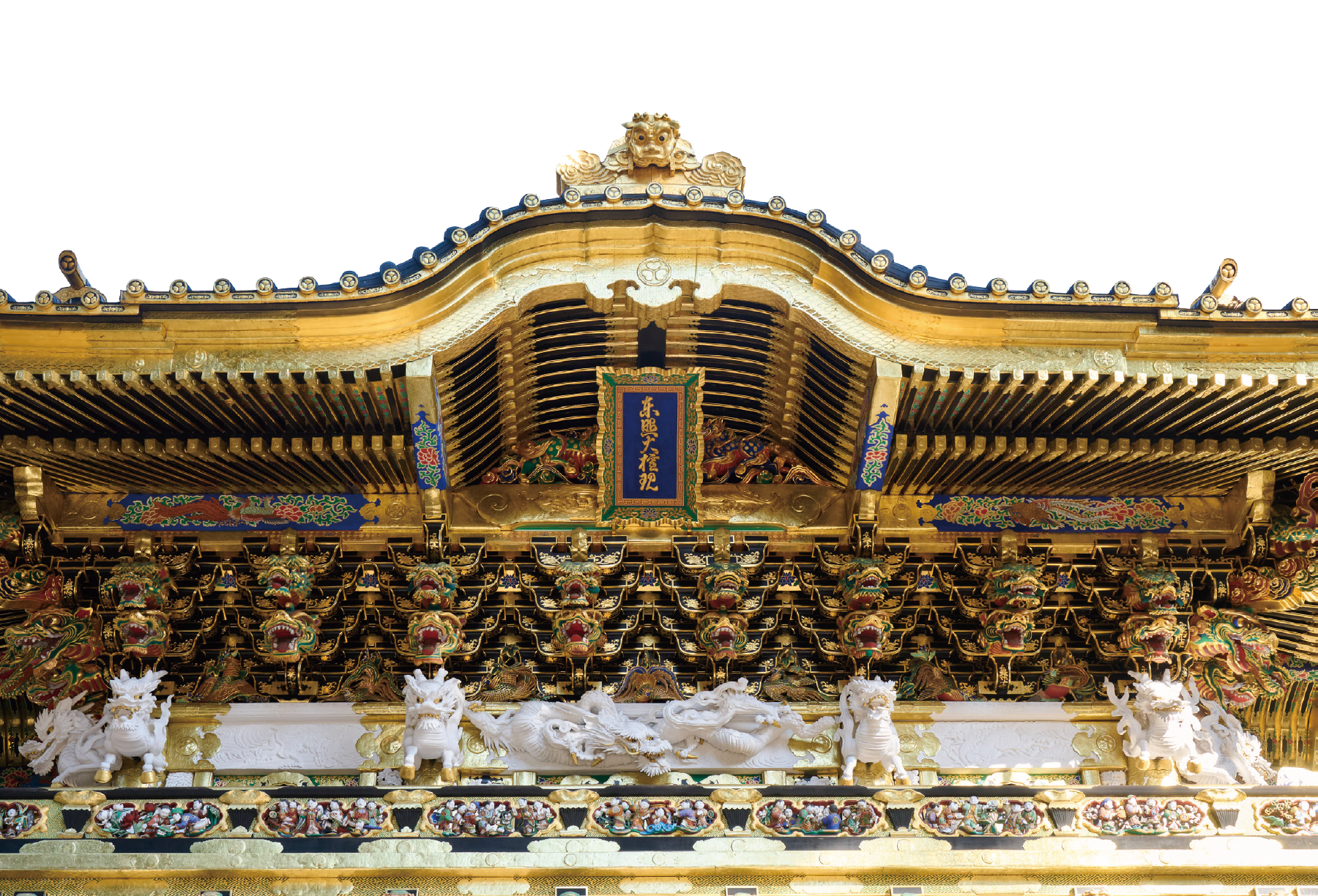
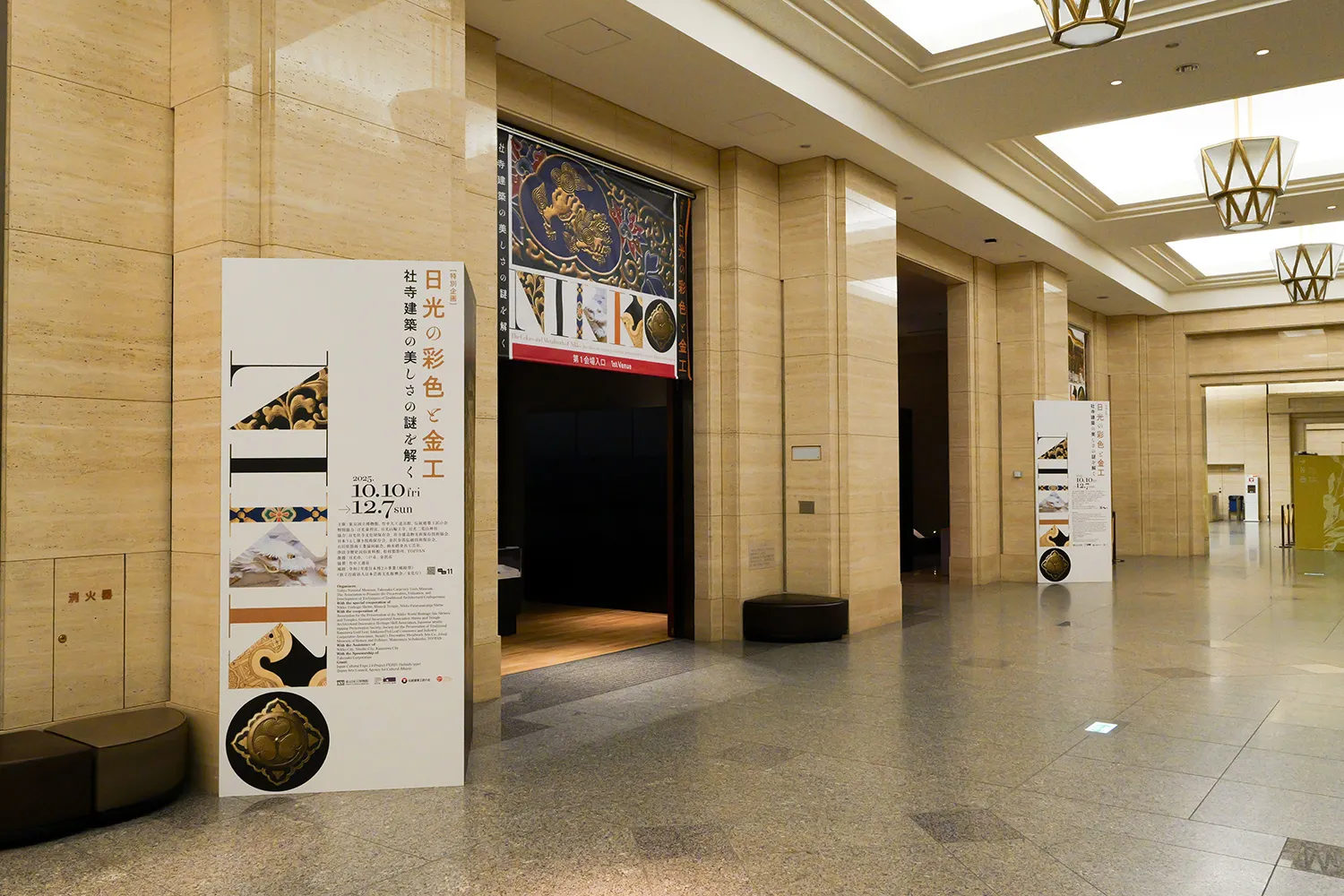
Photo Report

We present a photo report showcasing the Tokyo venue.
The charm of the UNESCO World Heritage Site “Shrines and Temples of Nikko” lies in its overwhelmingly magnificent architectural ornamentation. Focusing on two traditional techniques that support these decorations—coloring and metalwork—this exhibition introduces the dazzling world of architectural adornment and the master craftsmanship behind it through materials related to Nikko Toshogu and the tools used by artisans.

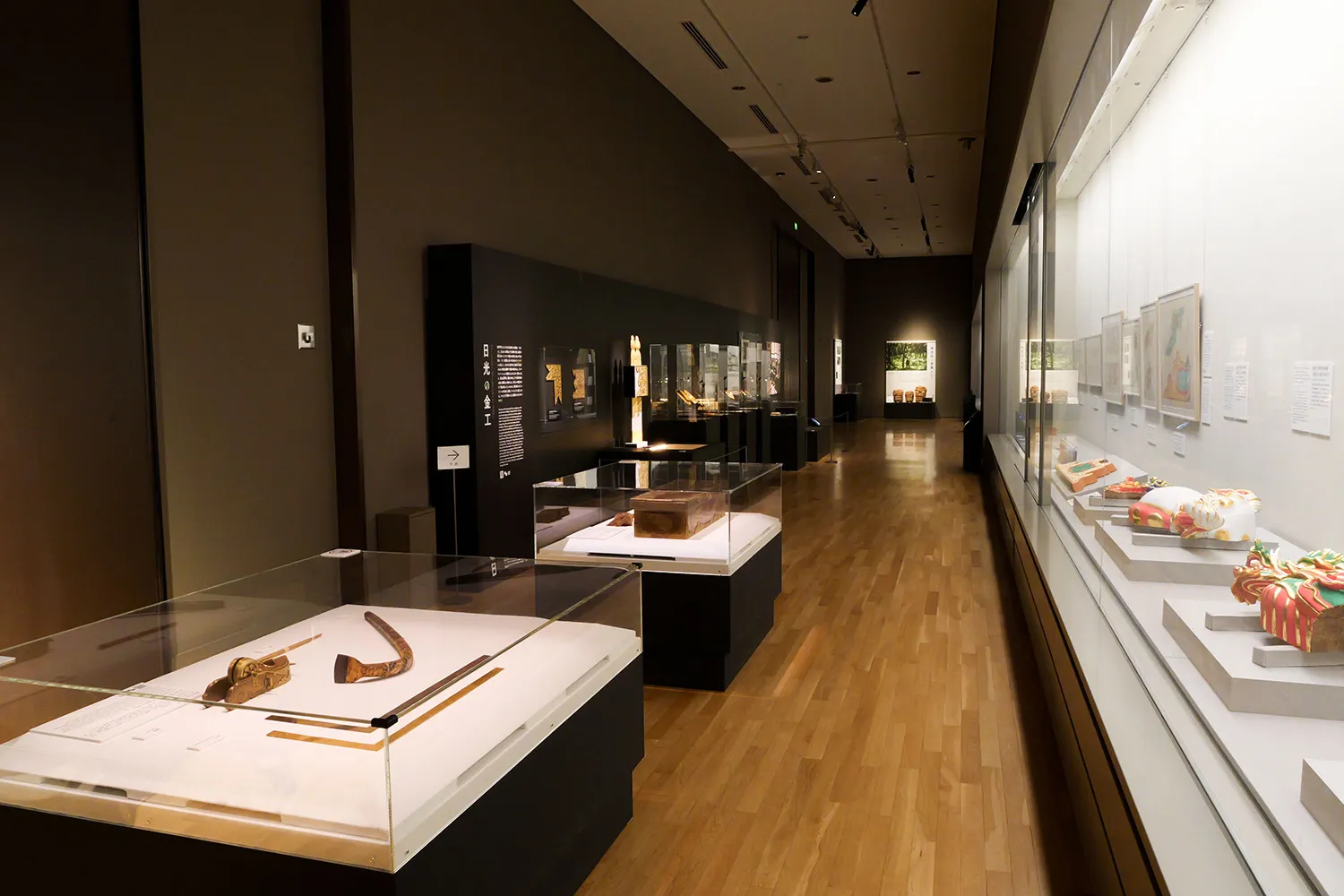
The venue consists of two spaces on the first floor of the Heiseikan at the Tokyo National Museum: the Thematic Exhibition Room at the front and the Orientation Room at the back.
In addition to the content introduced at last year’s Kobe venue, the Tokyo presentation features exclusive works such as the National Treasure Ceremonial Carpentry Tools, making the exhibition even more substantial.

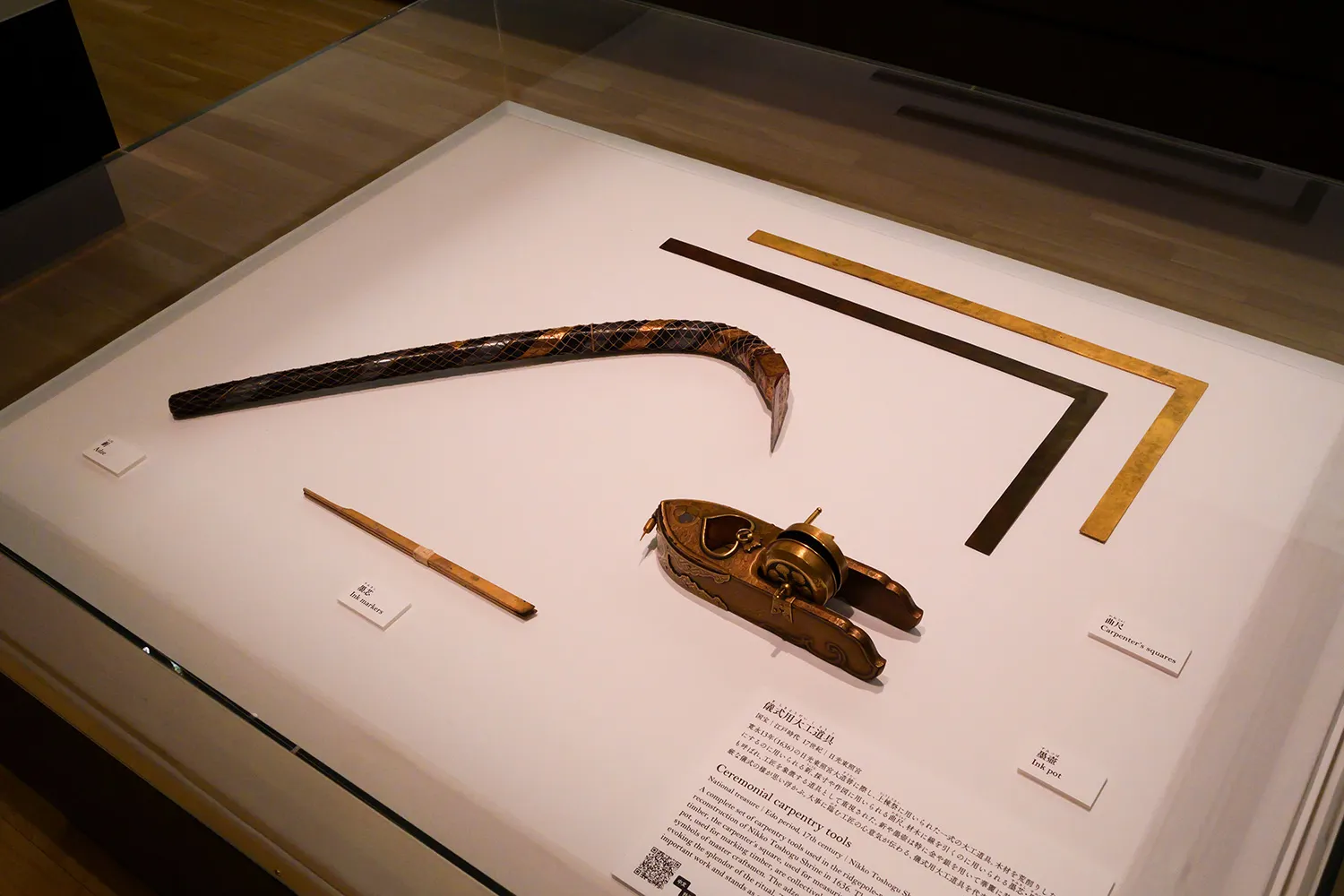
As you enter the first gallery (the Thematic Exhibition Room), you are greeted by the highlight of the Tokyo venue: the ceremonial carpentry tools of Nikko Toshogu (National Treasure, 17th century, Nikko Toshogu Collection).

These ceremonial carpentry tools are said to have been dedicated in 1636 (Kan'ei 13) by Kora Munehiro, Master Carpenter for the great reconstruction of Nikko Toshogu during the Kan'ei era. They are the only carpentry tools in Japan designated as a National Treasure.
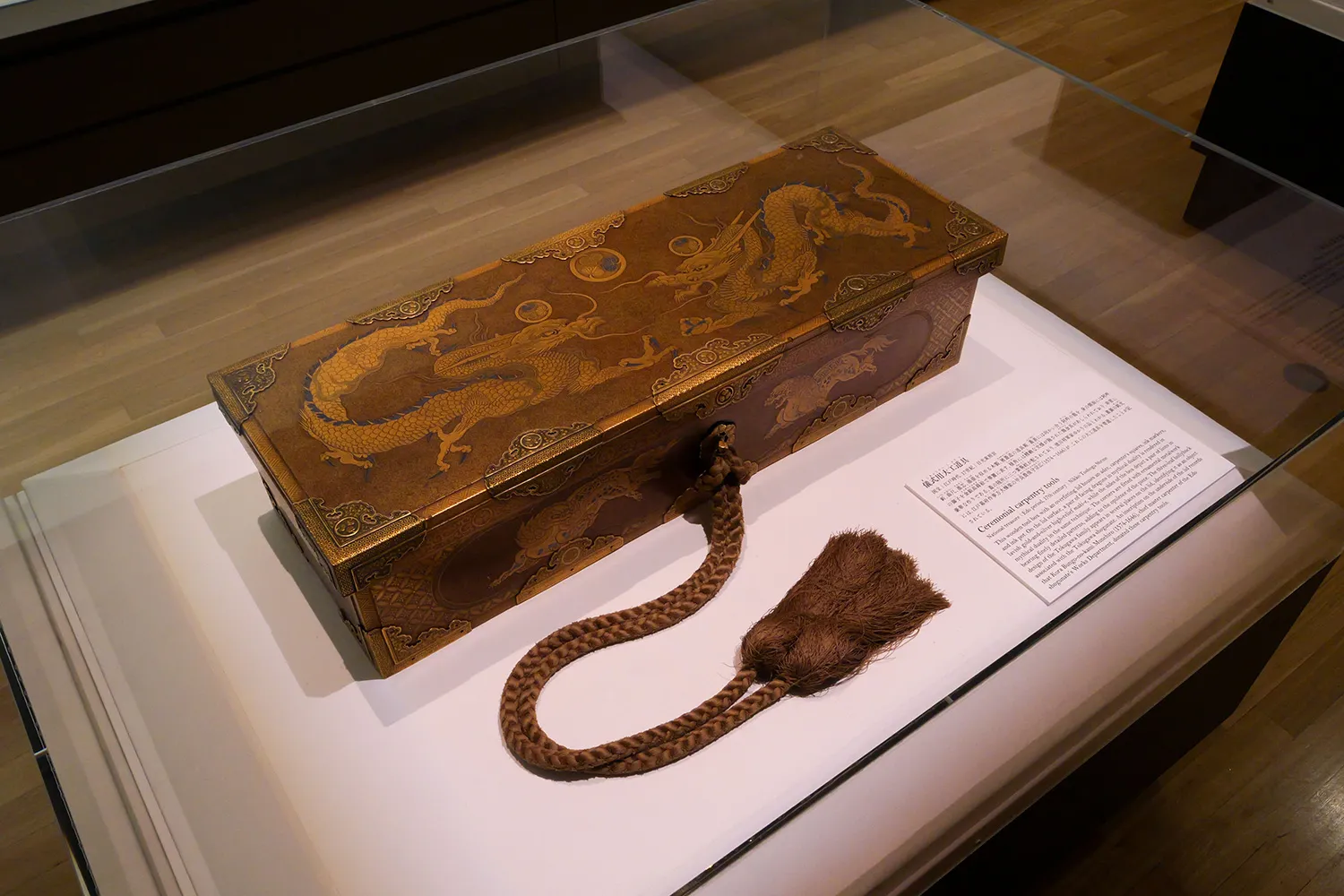
The set consists of a chona (adze), a kanejaku (carpenter’s square), a sumitsubo (ink pot), a sumisashi (ink marker), and a tool box.

The tool box is adorned with exquisite gold-and-silver high-relief maki-e lacquer decorations. On the lid is a pair of dragons, on the body a pair of lions, and the three-leaf hollyhock design appears throughout, indicating its connection to the Tokugawa shogunate.

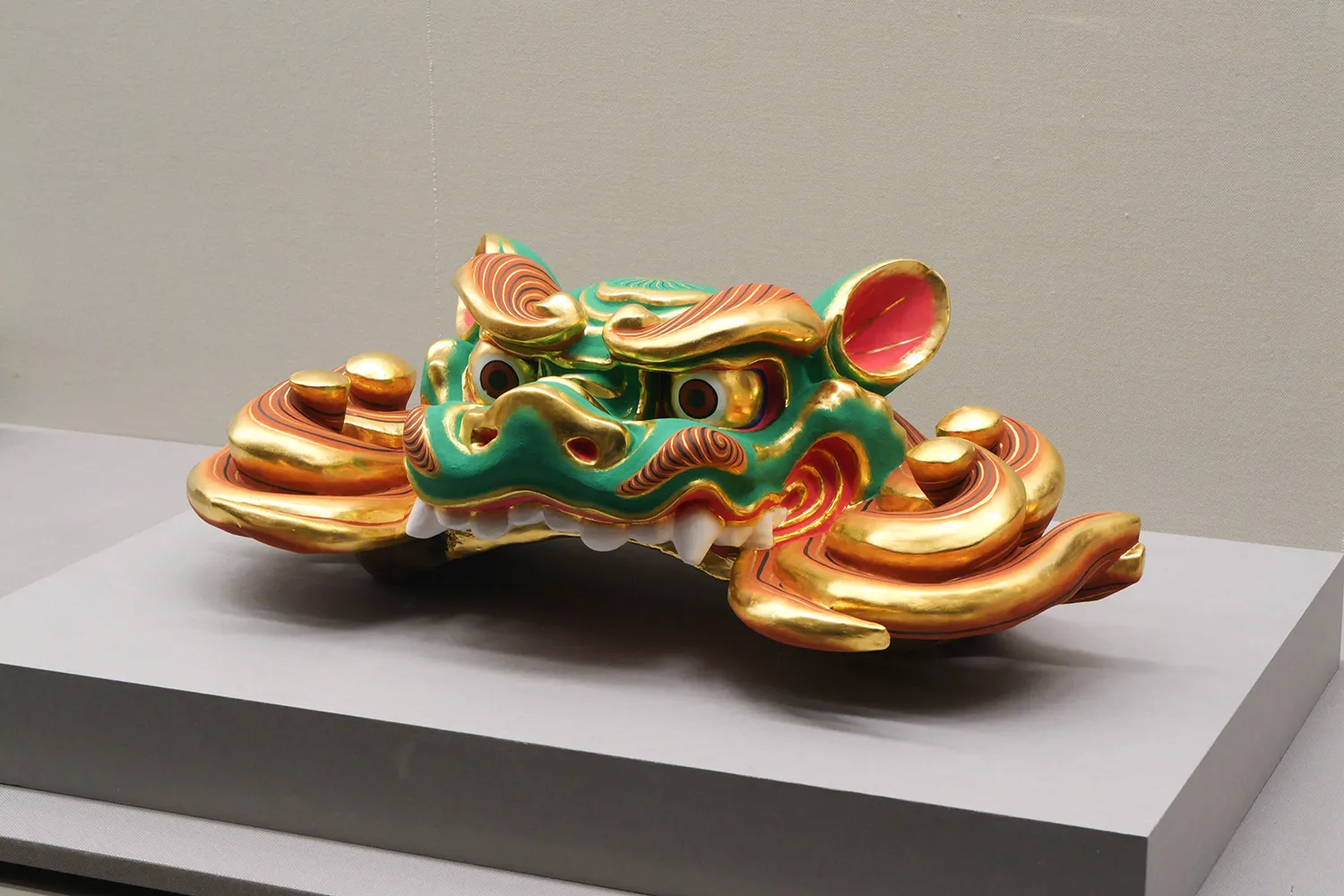
This is the recently restored “Carving of Shikami (A Lion’s Roar) and Yuiwata (molding relief) from the southern facade of Toshogu Shrine, Shimojinko” (Important Cultural Property, 17th century, Nikko Toshogu Collection).
At the Kobe venue, it was shown before restoration, but after careful repainting, it has been revived in vivid color. The technique used is ikezaishiki, in which pigments are applied over a lacquer-gilded (shippaku) surface.
The five architectural carvings on display in this exhibition will be reinstalled in their original locations after the exhibition ends.

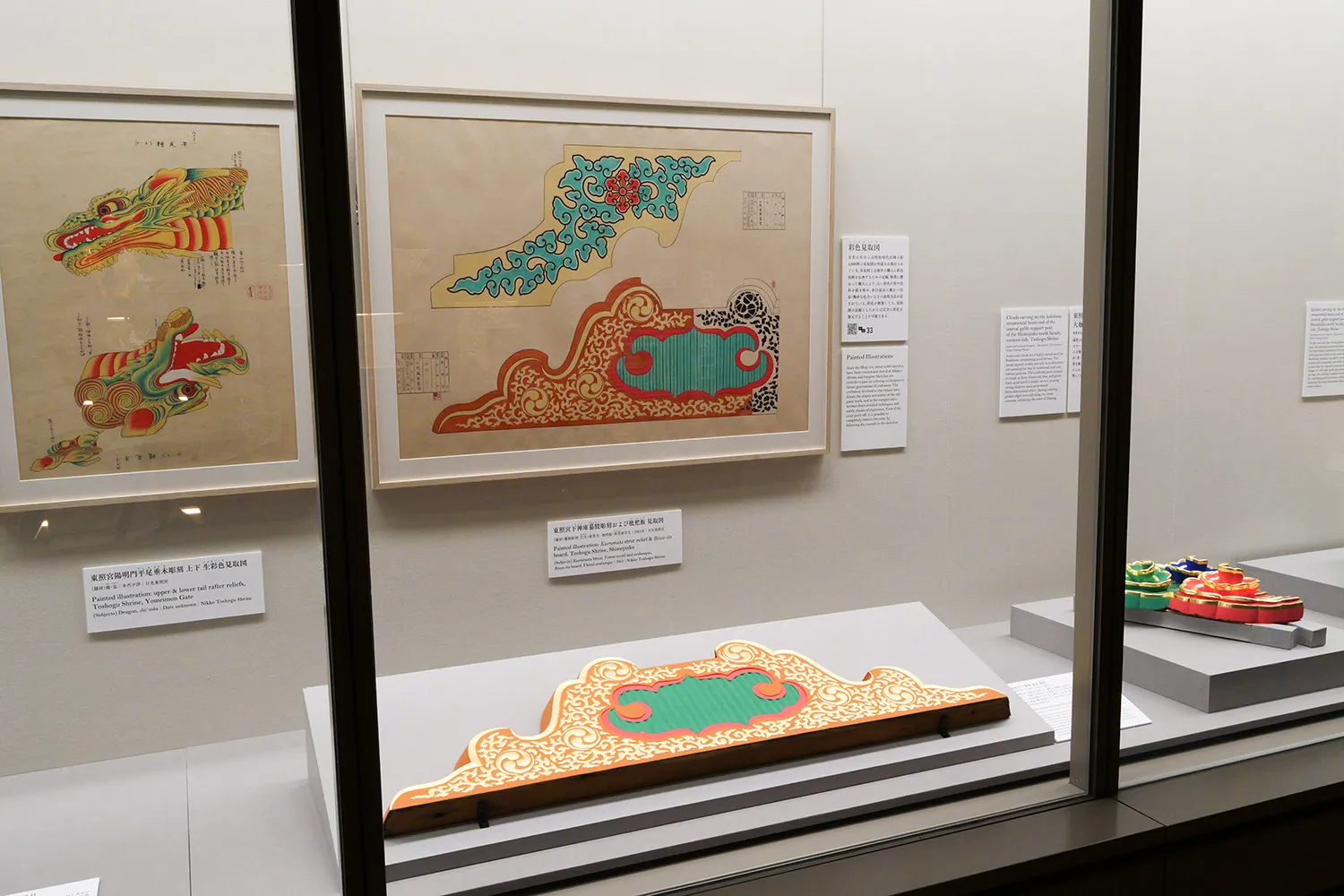
Kaerumata and painted illustration from the Toshogu Shrine, Shimojinko (both from the Nikko Toshogu Collection).
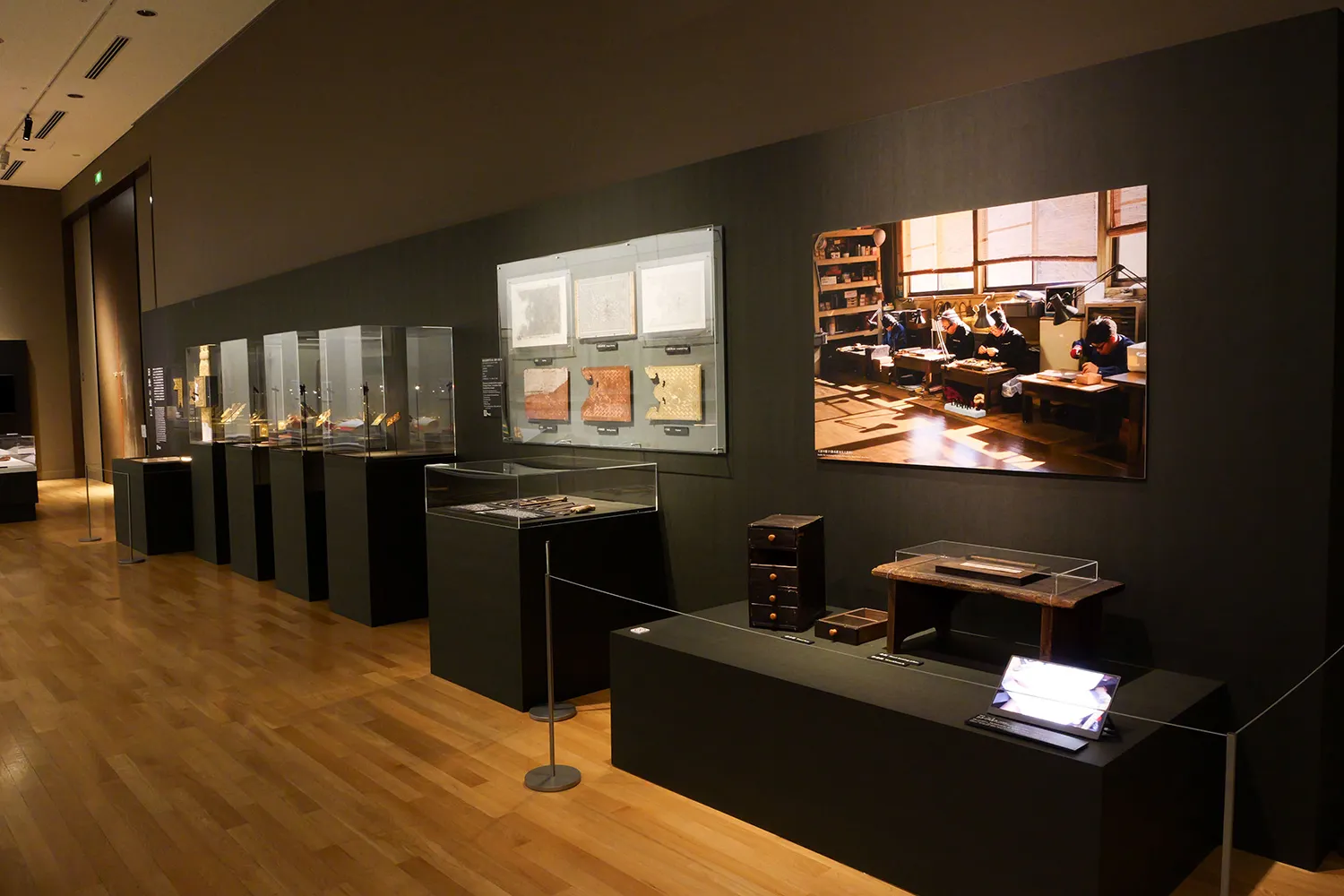
This painted illustration was created during the previous Showa-era restoration (about 60 years ago) and has been utilized in the current Reiwa-era restoration.
A painted illustration is a record made before restoration that captures the original shapes and colors of the decoration, allowing traditional painting techniques to be passed down to future craftsmen. At the shrines and temples of Nikko, around 4,000 valuable design sketches are preserved.

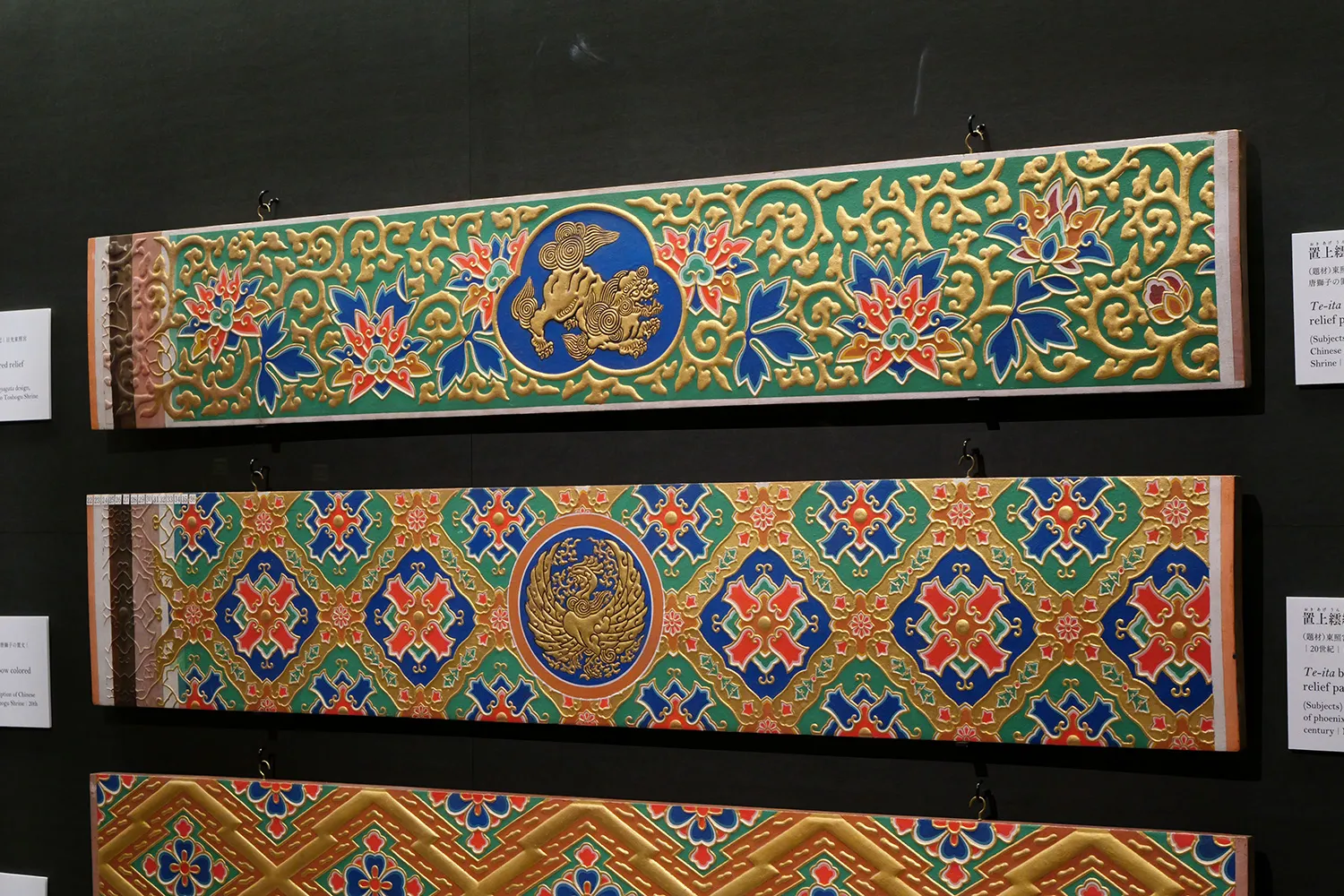
Te-ita boards, including Okiage Ungen Zaishiki (Nikko Toshogu Collection).
Okiage painting is a traditional technique in which patterns are raised to create a three-dimensional effect. A notable feature of Nikko’s decorations is the frequent use of this raised polychrome technique.

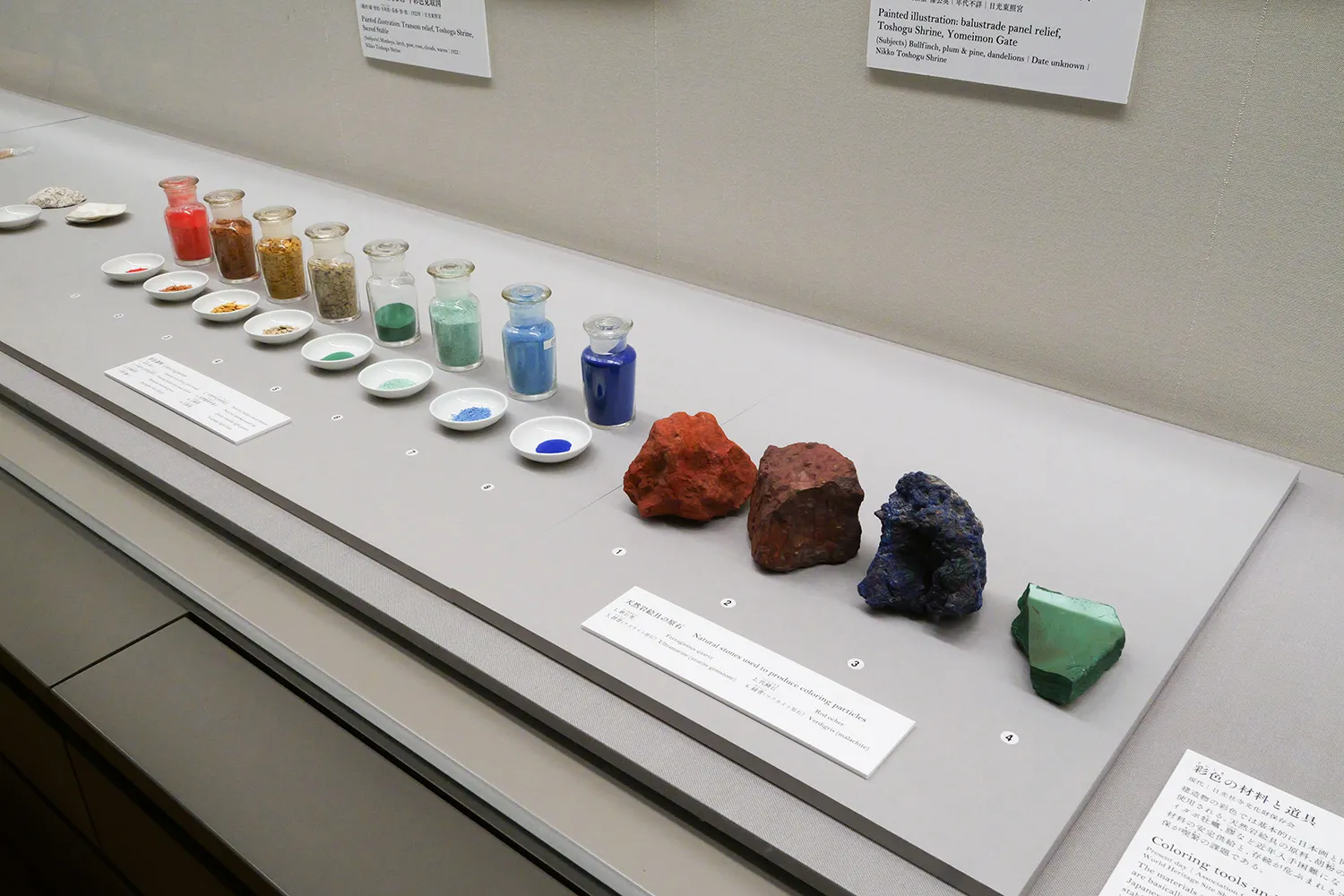
In recent years, natural raw materials for coloring have become increasingly difficult to obtain, and securing skilled artisans to use traditional hand tools has become a challenge. Urgent measures are needed to preserve these practices.
(Collection of Association for the Preservation of the Nikko World Heritage Site Shrines and Temples)

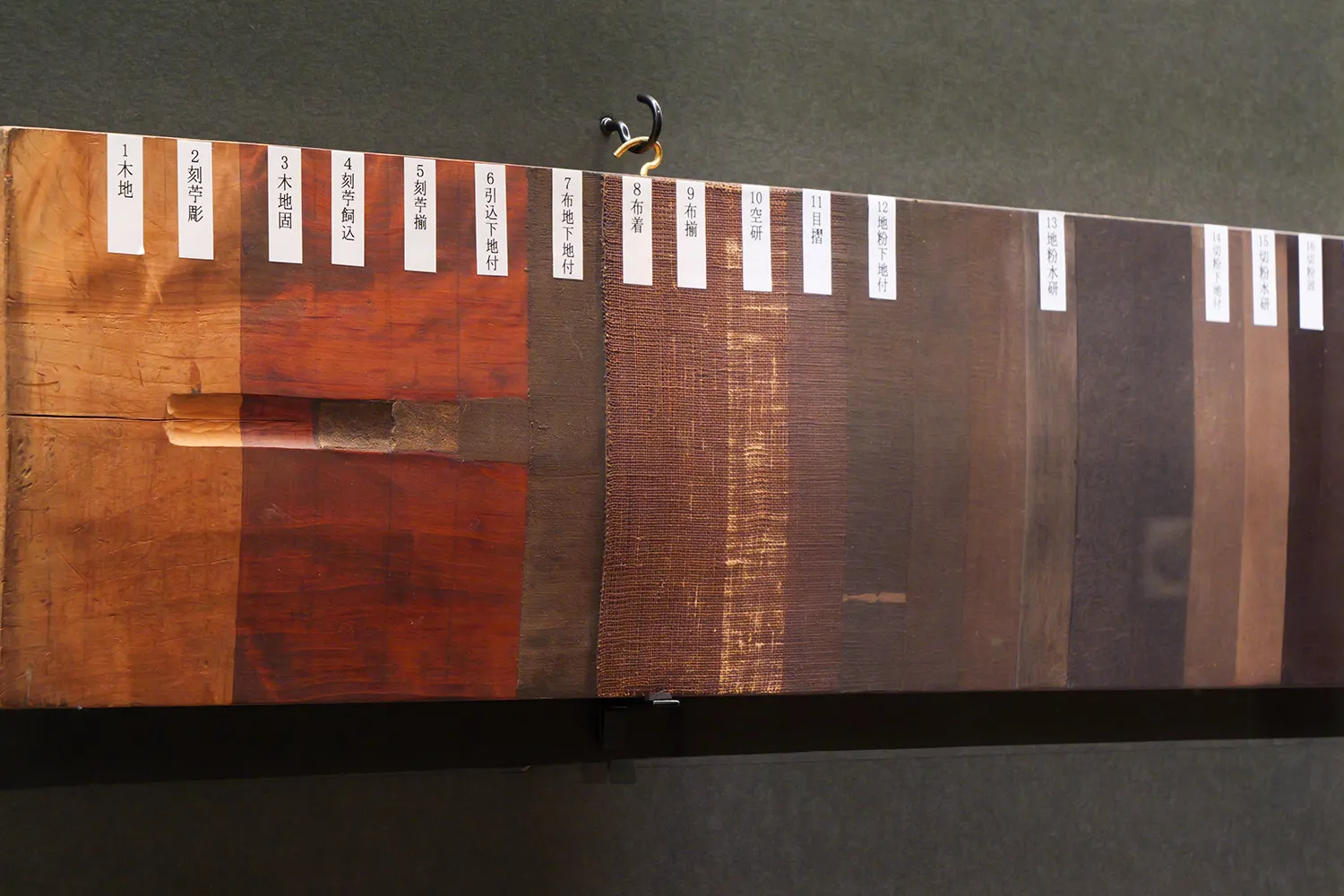
Urushi lacquered te-ita boards (Collection of Association for the Preservation of the Nikko World Heritage Site Shrines and Temples).
To withstand Nikko’s harsh climate, it undergoes 30 to 40 meticulous layers of preparation and application.

All spatulas used by lacquer artisans are handmade by the craftsmen themselves. In case one breaks on site, they prepare various shapes in advance to respond immediately.
(Collection of Association for the Preservation of the Nikko World Heritage Site Shrines and Temples)

Decorative Metalworks Corner.
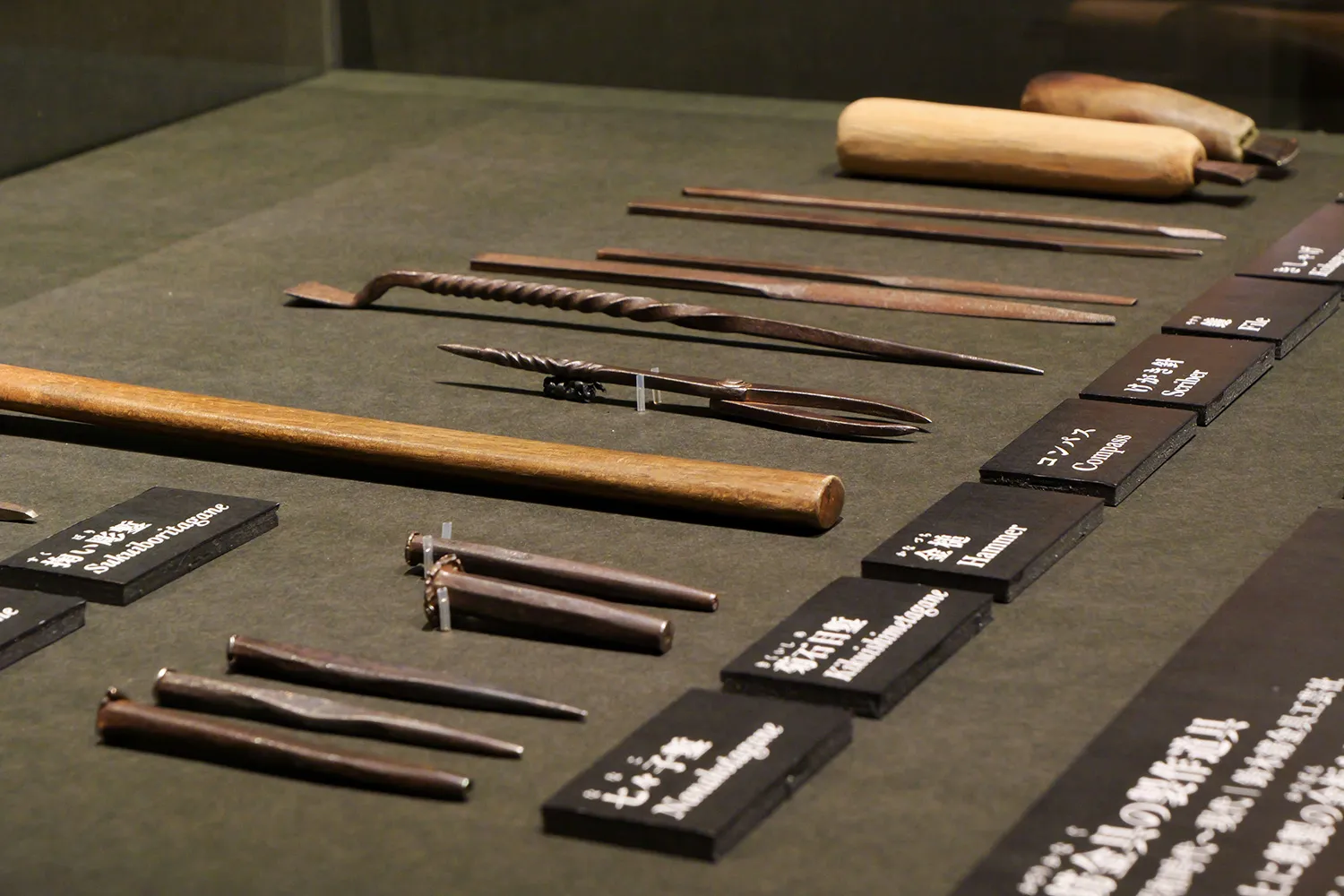
Architectural metal fittings, which are usually only seen from a distance, reveal a surprising variety of patterns when viewed up close. Each corner of the exhibition displays the works alongside the tools used to make them and related videos, allowing visitors to understand how they are crafted on the spot.
(Collection of Suzuki’s Decorative Metalwork Arts Co.)

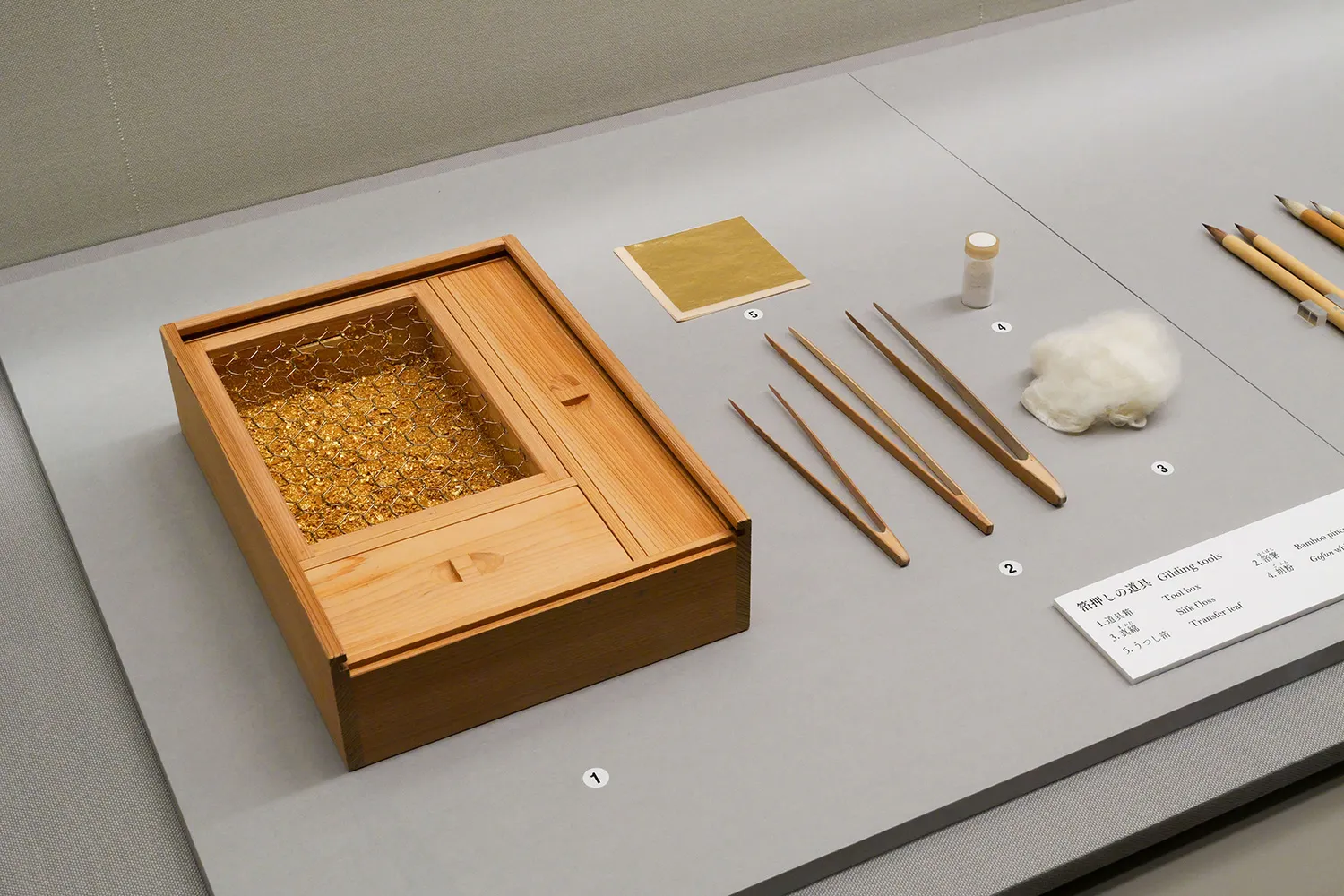
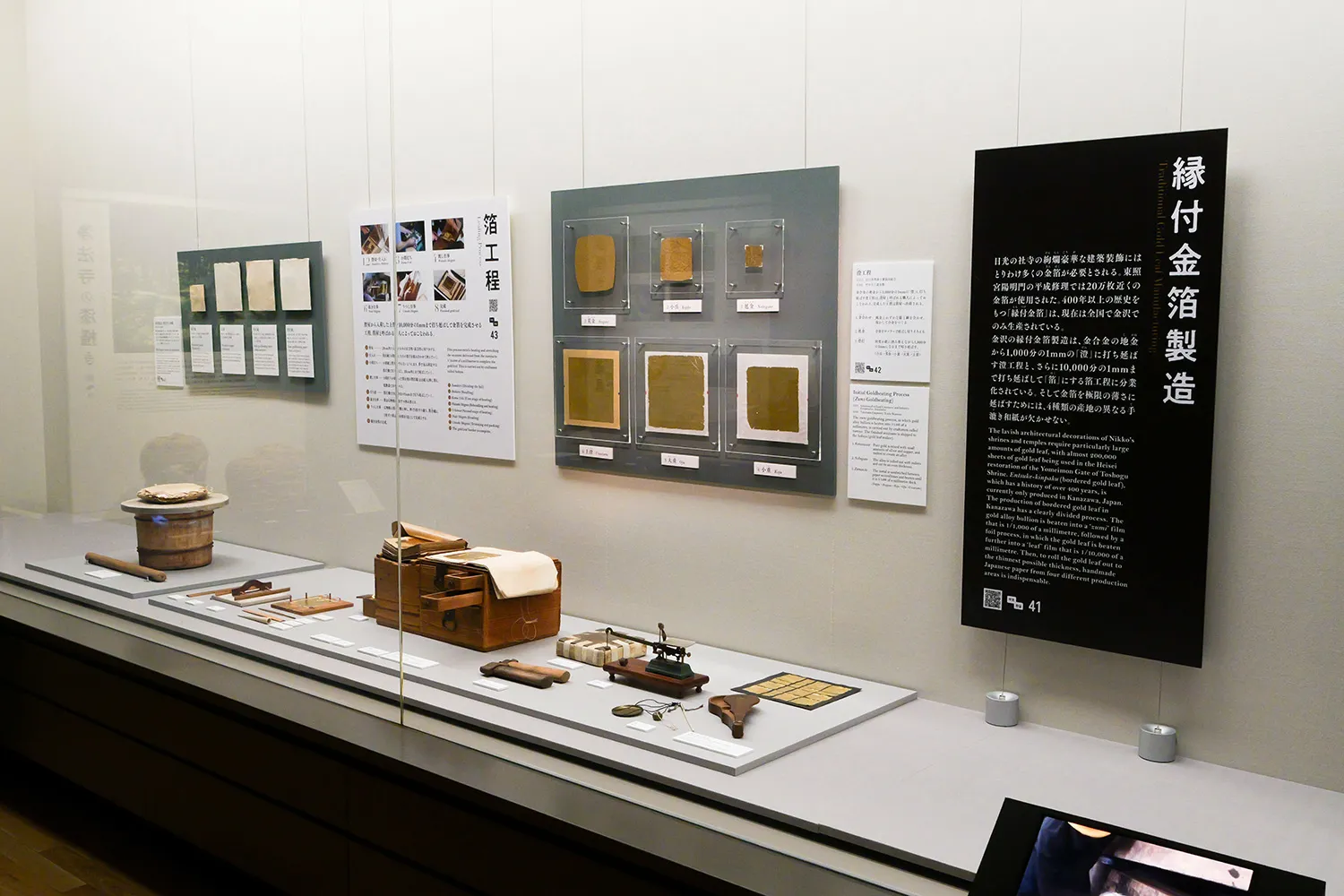
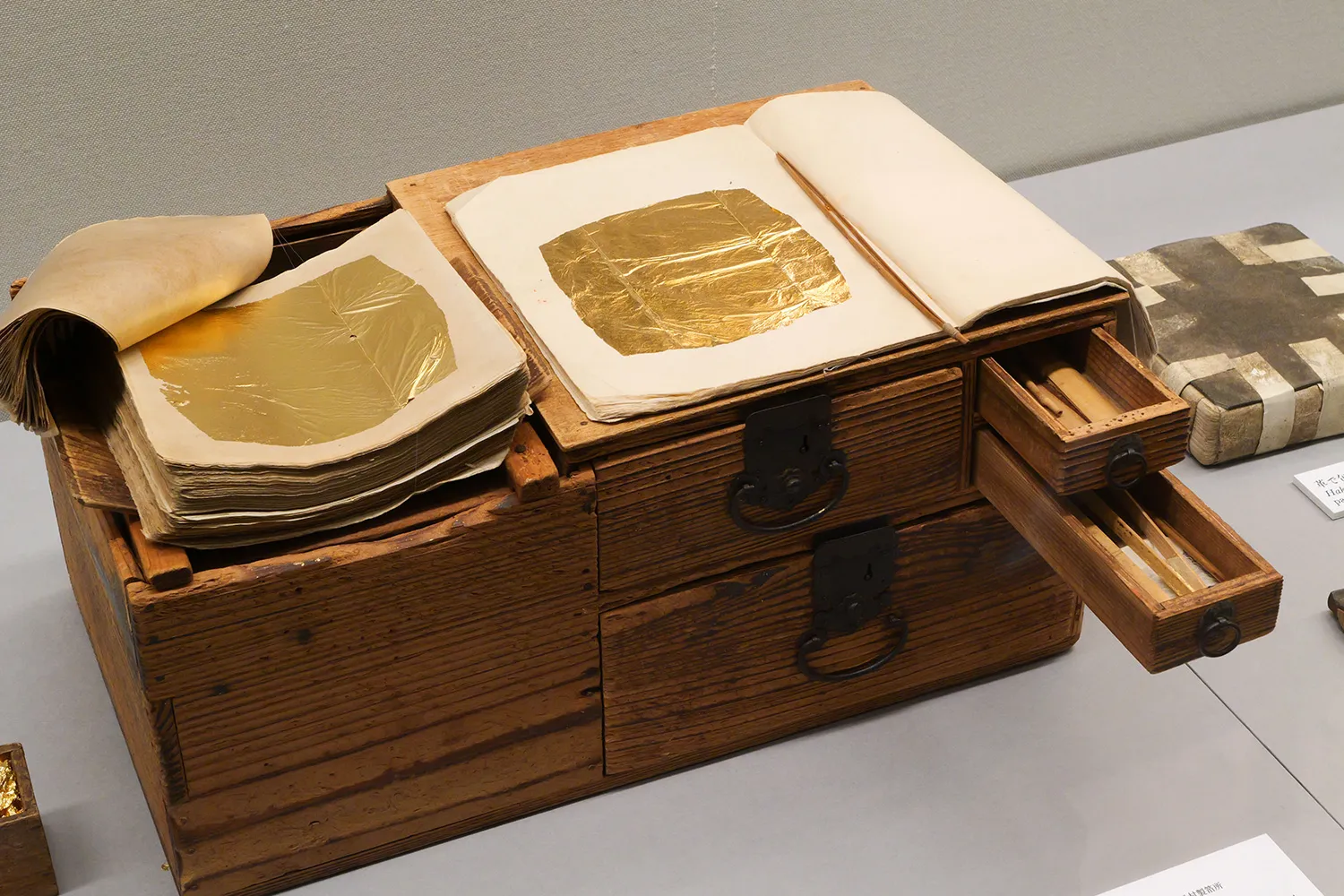
The gorgeous architectural decorations of Nikko require large quantities of gold leaf. In the Traditional Gold Leaf Manufacturing Corner, the exhibition introduces the technique of hammering gold alloys into leaf just 1/10,000 mm thick. To produce such thin gold leaf, handmade Japanese washi paper is indispensable, and tools for preparing the paper are on display exclusively at the Tokyo venue.
(Collection of the Ishikawa-Pref.Leaf Commerce / Industry Cooperative Associaion and Matsumura Seihakusho)

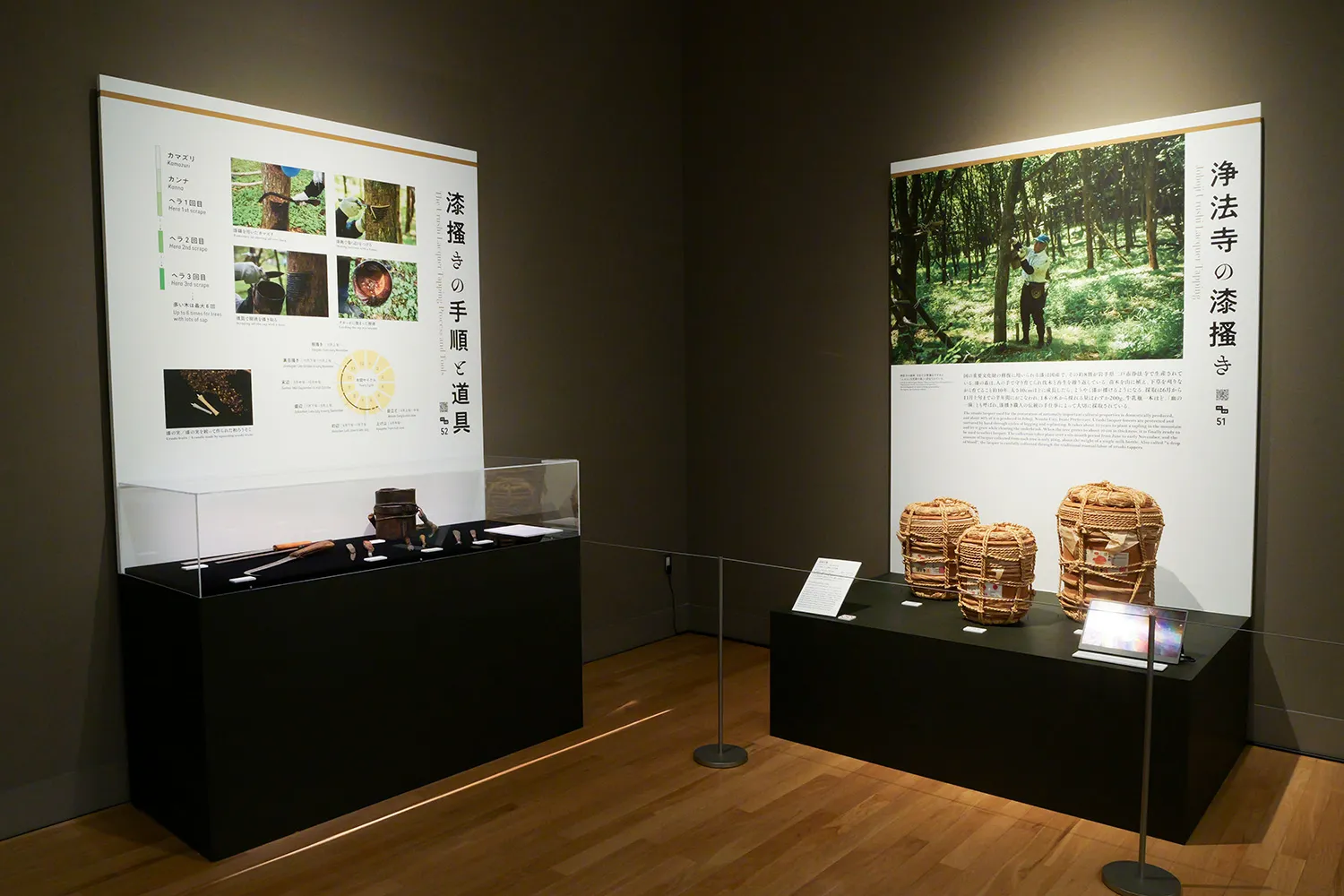
In the Joboji Urushi Lacquer Tapping Corner, the exhibition explains the process of harvesting lacquer, along with the tools used for collection.
(Collection of the Japan Urushi Tapping Preservation Society / Joboji Museum of History and Folklore)

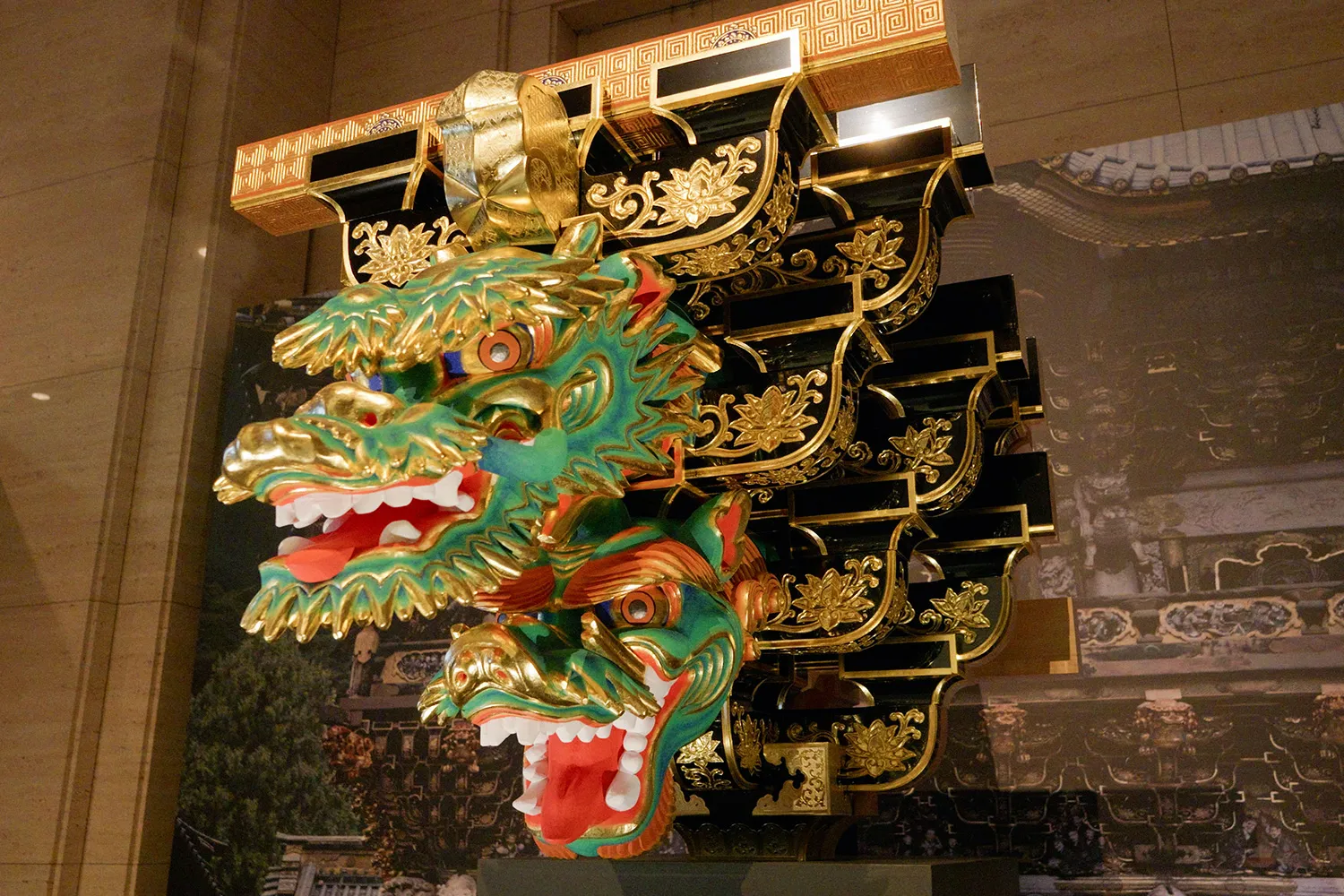
The imposing Kumimono model of Toshogu Shrine’s Yomeimon Gate has been installed slightly higher than at the Kobe venue to suit the scale of the Tokyo exhibition. This model showcases the pinnacle of architectural decorative techniques.

In the popular video corner, four films are shown, featuring Architectural Lacquerwork, Coloring, and Metalworks at Nikko, and Entsuke gold leaf production from Kanazawa.
Visitors are encouraged to experience the dazzling world of architectural ornamentation and the mastery of traditional techniques, which are usually visible only from a distance.

●You can also view videos of the exhibition. YouTube

  • INSTAGRAM
  • TWITTER
  • FACEBOOK
  • youtube
Copyright 2025 TAKENAKA CARPENTRY TOOLS MUSEUM and TOKYO NATIONAL MUSEUM. All rights reserved.